


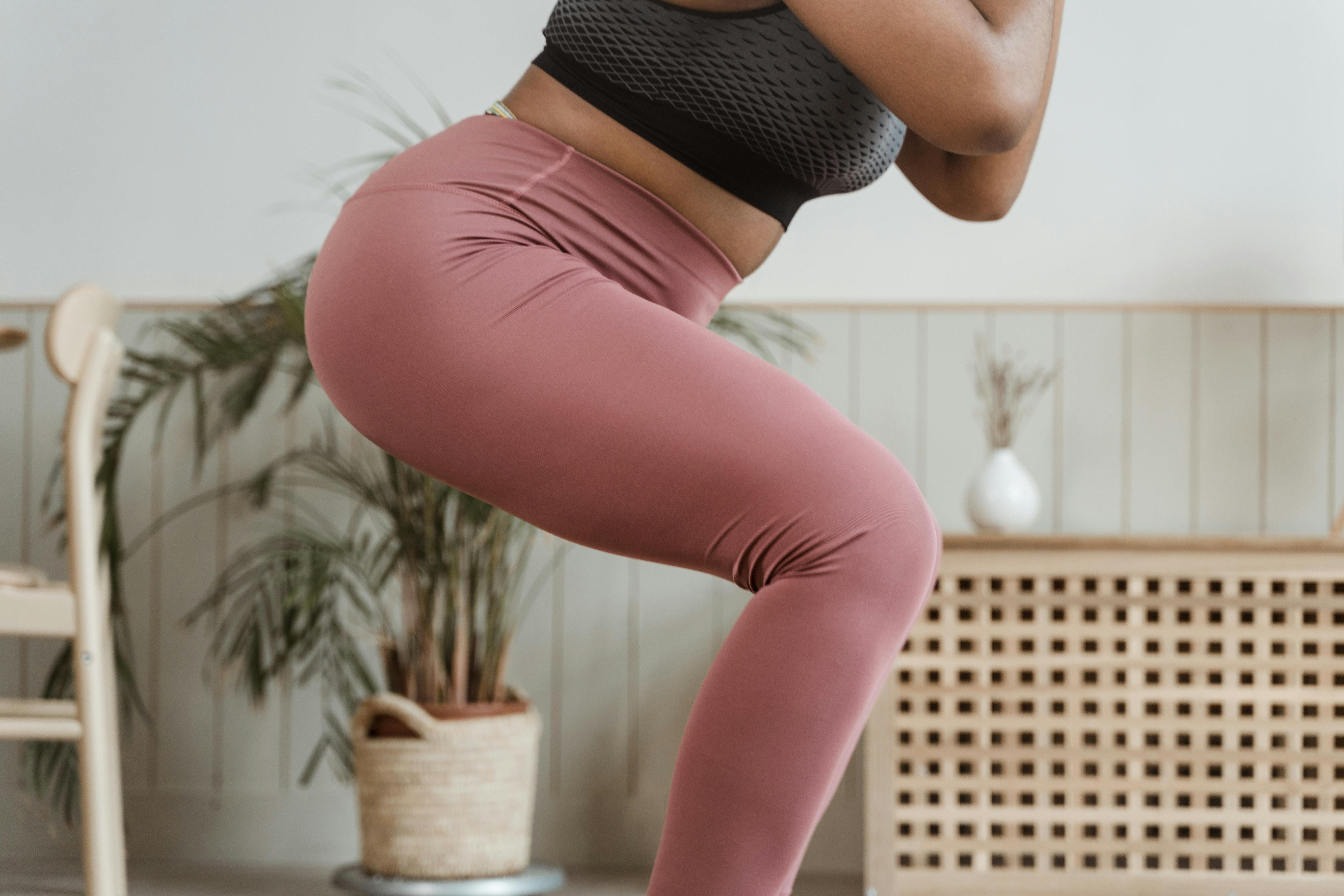
I’ve been on a mission for the past few months to figure out why in the world I still struggle so much with squats, after many, many years of working on them. Though I firmly believe that all squats count — including quarter-squats (seen above) and chair squats — there isn’t any obvious reason why I shouldn’t consistently be able to do a confident, stable squat that involves my hips moving lower than my knees.
15 ways to make squats more comfortable

If you have a love-hate relationship with squats, you aren’t alone. I’ve been exercising regularly for almost two decades, yet I still constantly feel like I’m “working on” my squats — not just increasing the weight I can move but trying to improve my depth, my ankle mobility, my capacity for going low without leaning forward too much. It’s hard!
What’s gotten in the way? Many things. Super-tight hip flexors. Patellofemoral pain syndrome. Awkwardly long limbs. And, honestly, fear: The heavier I go, and the deeper I try to squat, the less confident I feel, which is kryptonite for good squatting.
It’s like driving a stick shift car. I know how. But that doesn’t mean I can actually do it. (Between us, I haven’t actually driven literally any kind of car in about a decade, so this isn’t the best analogy, but you get what I mean.)
As I’ve chatted about a bit in a few recent workout videos, I’ve been seeing a PT for some weird hip flexor pain and mobility issues for the past few weeks, and have taken advantage of the opportunity to dig into all these little problems that seem to be holding back my squats. (It’s Jenny Maher at Windsor PT in Brooklyn — she is wonderful!)
And yes, my hip flexors are pretty restricted, which plays a big role in my squats. But the real root of the issue seems to be much farther down the kinetic chain.
I certainly knew that ankle mobility, and specifically dorsiflexion (the ankle movement where the top of your foot and your shin move toward each other) played a big role in squat mechanics — after all, to keep you balanced over your feet, your shins need to move forward as your hips and knees bend. And if you’ve ever squatted with your heels elevated, you’ve probably experienced how much easier it is: You may have been able to go much deeper with relatively little trouble from your ankles (thanks to the elevation, they have to bend a lot less). But I had no idea just how limited my own dorsiflexion was. It turns out, I have tight calves and achilles tendons, and some restrictions/impingement along the fronts of my ankles. Jenny has done a lot of manual work to ease these restrictions and given me some calf and ankle stretches to do on my own, and they’ve all made a major difference in how I move.
Meredith Sell also recently posted about some ankle and calf work that helps her prep for squats — take a look:

But that’s not all! A few weeks ago, Jenny had me try something that felt a little odd at first: a “doming” exercise for my midfoot. It goes like this: With your foot flat on the floor, you try to keep your toes long and the ball of your foot down as you imagine pulling the ball of your foot toward your heel, exaggerating the arch of your foot.
Here’s a little gif I made to show you:
Now, I’m not a physical therapist, and I can’t say across the board that everyone on earth should be practicing this exercise — there are some folks out there with overly high/strong arches, which could pose their own issues, and presumably if you’re currently in a really bad flare of a condition like plantar fasciitis it might not feel good. (Always ask a PT or sports medicine doc to be sure!) But my understanding is that it’s relatively common for folks to overpronate (meaning the inner part of their midfoot tends to roll toward the ground as they stand or walk), and strengthening the muscles that help counteract this overpronation can be really helpful.
Also, it should be noted that if you’ve heard the term “doming,” you probably think of it in a very different context: the protrusion of the middle of your belly that can happen when there’s excess pressure on your linea alba and/or when you’re dealing with diastasis recti. This is not the same thing! And we can (and should, probably) talk about that type of doming (slash coning, slash peaking) some other time.
So, foot doming! You can do this as a foot-strengthening exercise on its own (it’s especially helpful for folks with flat feet, those recovering from plantar fasciitis — though again, probably not in an active flare of it — or foot and ankle injuries, and those working on balance, though lots of folks can benefit). But you can also do it as part of an exercise that requires foot and ankle stability and mobility, like a squat, lunge, or balancing exercise. Basically, you dome your foot, and keep it domed as you do the exercise.
The first time Jenny had me try doming my feet for a squat, I truly couldn’t believe the difference. I immediately felt new muscles firing in my feet and ankles, and was able to squat so much more smoothly, confidently, and deeply.
I’m really living the doming lifestyle now: I pretty much dome both feet before any squat or lunge, and certainly when I’m in a single-leg stance (whether for balance work or something like a single leg deadlift).
Give it a try, if you like, and let me know what you think. It may feel really hard at first not to scrunch your toes — work on it and it may be easier over time to keep them long and flat.
Squats still kind of suck for me, but with this helpful trick, they suck a lot less.
On another note! I’m working on migrating my website for Pilates for Abortion Funds from Wix to Github — it was already pricey but starting this month the cost was increasing to more than $500 per year, yeesh — and I’m hoping that by the time you get this, it’ll be done. But just in case: My next PFAF class is next Tuesday 11/18 at 8:00pm on Zoom (with video to follow). If you’re interested in joining, make a donation of any amount to your favorite state or local abortion fund, Care for All, or the National Network of Abortion Funds, send me the donation receipt — you can do so by replying to this email, if you are indeed reading this via email, or by DMing me on Substack (I’ll accept your message and then you can share a screenshot) — and I’ll add you to the calendar event. If you make a recurring donation, I’ll add you to all future events.
Hope to see you there!
One final thing: Speaking of doming/coning/peaking — I am way overdue to write a post about prenatal and postpartum exercise. This is a huge topic, and I’d love to know what you’d like to learn about it! Please share your questions in the comments or via DM. We can talk about what “safe” exercise means during these times, WTF intra-abdominal pressure is, your pelvic floor, and anything else you’d like.
xo
Anna
My curiosity/inexpert advice around prenatal exercise would be consider gaining strength, especially in lower body earlier in pregnancy if possible so that the period where you can’t exercise as much feels easier and more supportive.
Re: postpartum exercise, I’m 3 years post now, but I was never able to find what I was looking for in one place when I was ready to increase my movement (I was on bed rest for a portion of the pregnancy so lost a lot of capacity despite being pretty active prior.) What I wanted was what exercises to do to start rebuilding, how to know when it was safe to start and progress, what to look out for in terms of pelvic floor/back/DR/etc. I couldn’t get clear guidance even from my providers about when it was safe to start running again. TBH I’m *still* wondering if I did the right things in terms of rehab or if I’ve neglected something that’s going to come back to bite me later!