

A great core-strengthening exercise, plus tons of ways to adjust it
Add this move to your routine!

Before we explore this exercise, a little reminder that I’m launching a new six-week small group-based class this summer to help true beginners learn how to strength train.
Startup Strength will be mostly instructional — aka not a workout class — but we’ll move, too, and you’ll get simple movement homework to get more comfortable with the basics. You’ll have the opportunity to attend live sessions to ask questions, troubleshoot, and share your experiences with fellow participants. By the end of the course, you’ll feel ready to dive into a more formal strength program — like the ones here on HTM! The cost will be $300, or $250 for paid subscribers to How to Move. (Financial support will be available, as will the ability to pay more to help offset the cost for others, if that’s an option for you.)
Please complete the form here to join the waitlist and let me know a few preferences! You’ll be the first crew to receive the registration link when it’s ready.
If you’re looking for a new abdominal move to work into your exercise routine, may I suggest toe taps? They look so simple, but doing them correctly is anything but easy — and when you do, you’ll engage both the lower rectus abdominis (the more superficial abdominal muscles in the lower part of your belly) and the deeper core muscle called the transverse abdominis, or TA.
Toe taps are also an excellent introductory move for those interested in working their way up to tougher abdominal exercises in the same family, such as the Lower-Lift in Pilates.
The key is maintaining a neutral spine and pelvis and not letting your lower back arch up off the floor. Lying supine and lowering your legs without lifting your low back requires a lot of control, and that control only comes from deep abdominal connection and engagement. You’ll also want to try to keep your hips steady and even — noticing what techniques help you avoid rocking back and forth as you switch legs.
And remember that for all of these options, you control the resistance and range of motion. It may be that your foot reaches all the way down to the floor. It may also be that you’re only moving an inch or two. Stay tuned to your lower back to figure out the range that feels challenging but still controlled for you.
One more note before we get started: Breath is a huge part of connecting with your TA. To engage it, take a deep inhale, and then exhale all the air out of your lungs, feeling your ribs pull in, and your lower belly gently gathering in and up. Maintain that hugging, corset-like engagement the entire time your legs are moving (even as you continue to breathe into and out of your ribcage). If you notice you’ve lost the hugging sensation in your belly, take a pause, breathe in, and then exhale to re-engage before continuing the movement.
Option 1: Alternating Toe Taps
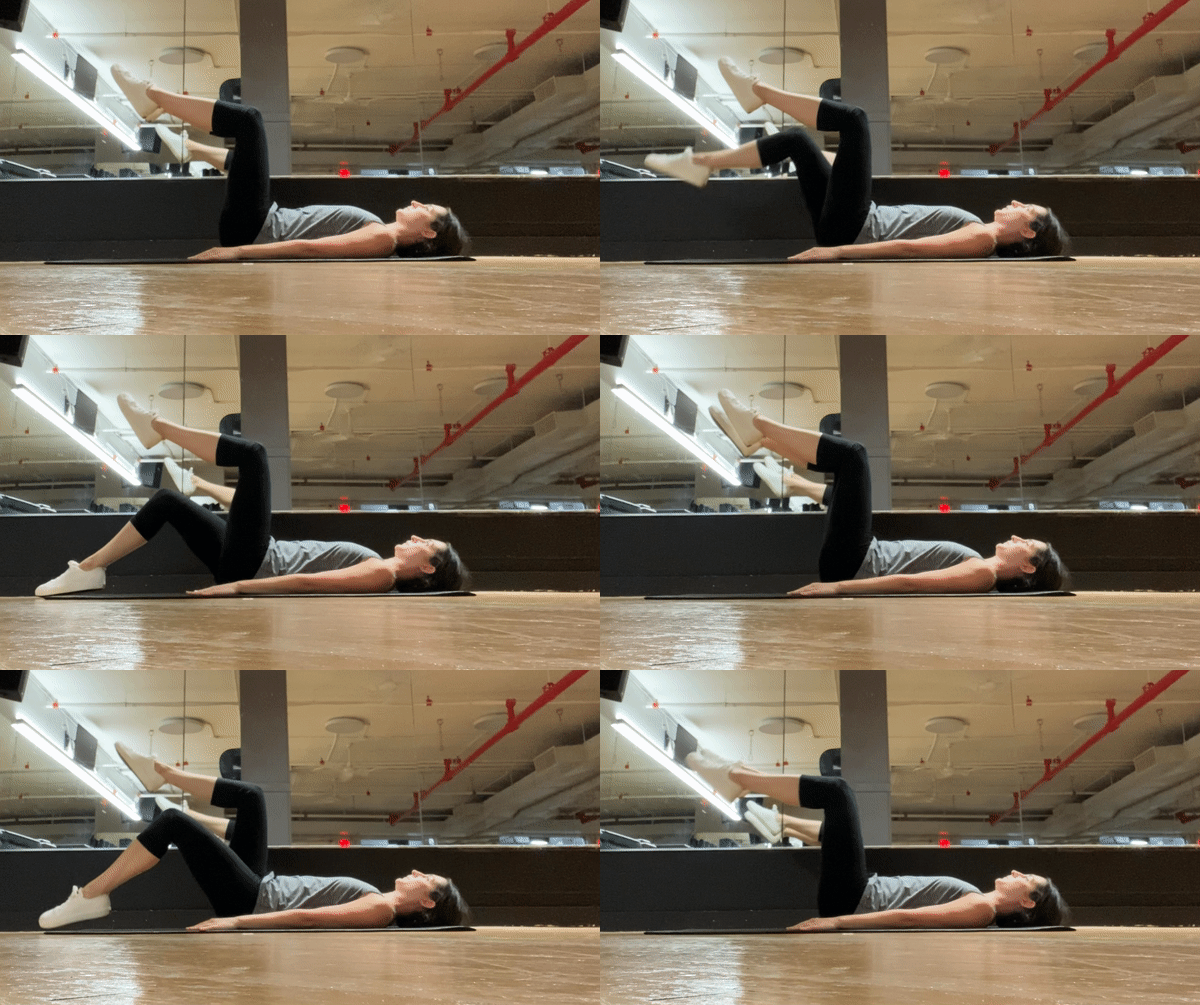
Lie down with arms by your sides, palms down. Engage your abdominals (see explanation above) and lift your legs so your quads are at a 90-degree angle with your torso. Bend your knees so your legs are at a 90-degree angle.
Keeping your shoulders and hips steady, and maintaining the 90-degree angle at the knee, lower one toe to tap the floor (or even just lower it towards the floor), then return to the starting position (you may want to think about reaching your leg forward as you lower it rather than just tapping your toe down, which could inadvertently trick you into just bending your knee more to reach the floor). Repeat on the other leg, and keep going, alternating legs each time.
I like to exhale as I lower my leg, and inhale as I lift it. Try this breath pattern and see if it works for you!
Option 2: Double Toe Taps
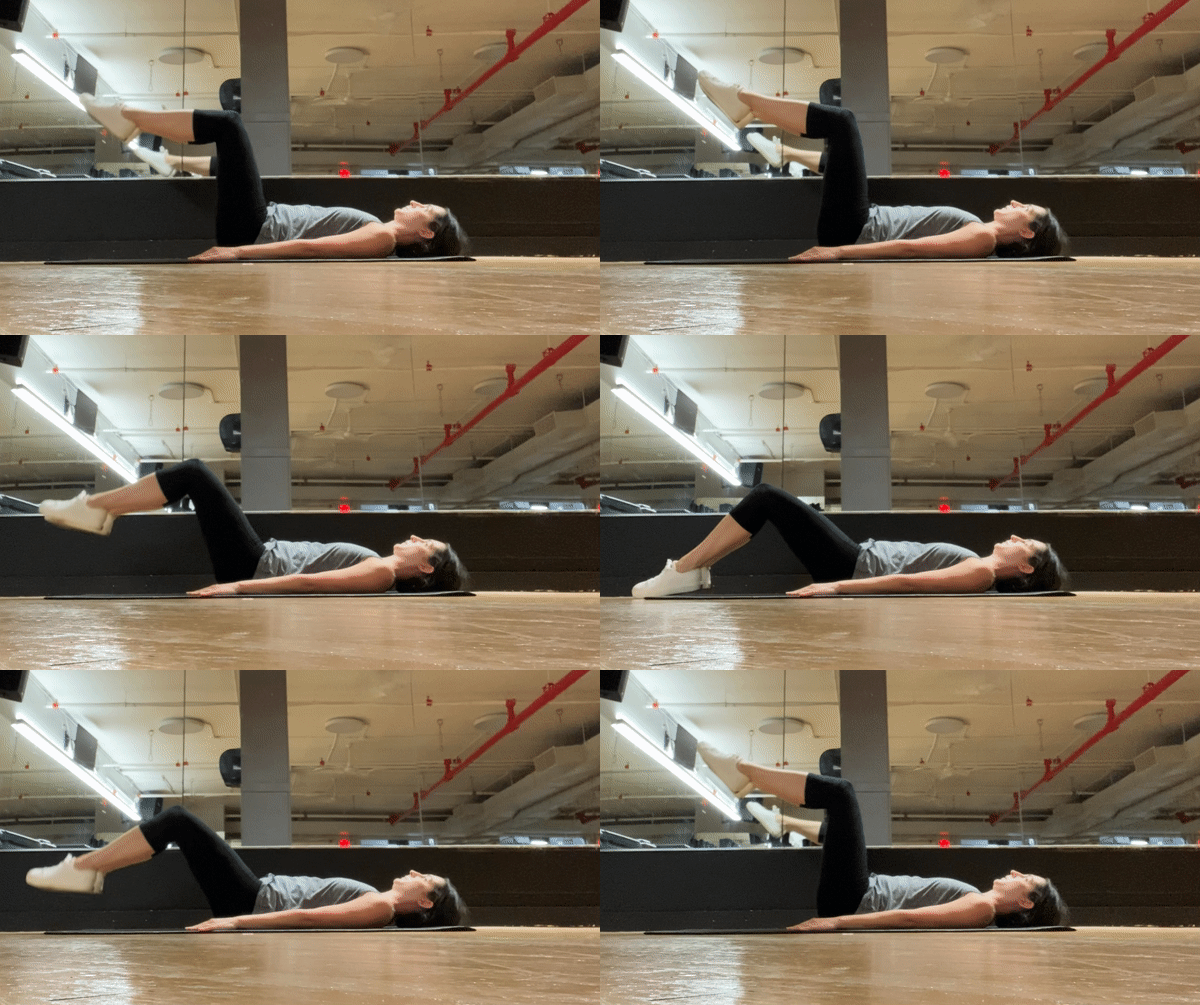
Lie down with arms by your sides, palms down. Engage your abdominals (see explanation above) and lift your legs so the quads are at a 90-degree angle with your torso. Bend your knees so legs are at a 90-degree angle and glue your legs and feet together. Keeping your shoulders and hips steady, and maintaining the 90-degree angle at your knees, exhale as you lower both legs to tap the floor with the toes (or however low you can go while maintaining a neutral spine — maybe not all the way!), then inhale as you return to the starting position. Perform 5–10 reps, then rest. You can do another set or two if you like.
Option 3: Alternating Leg Lowers
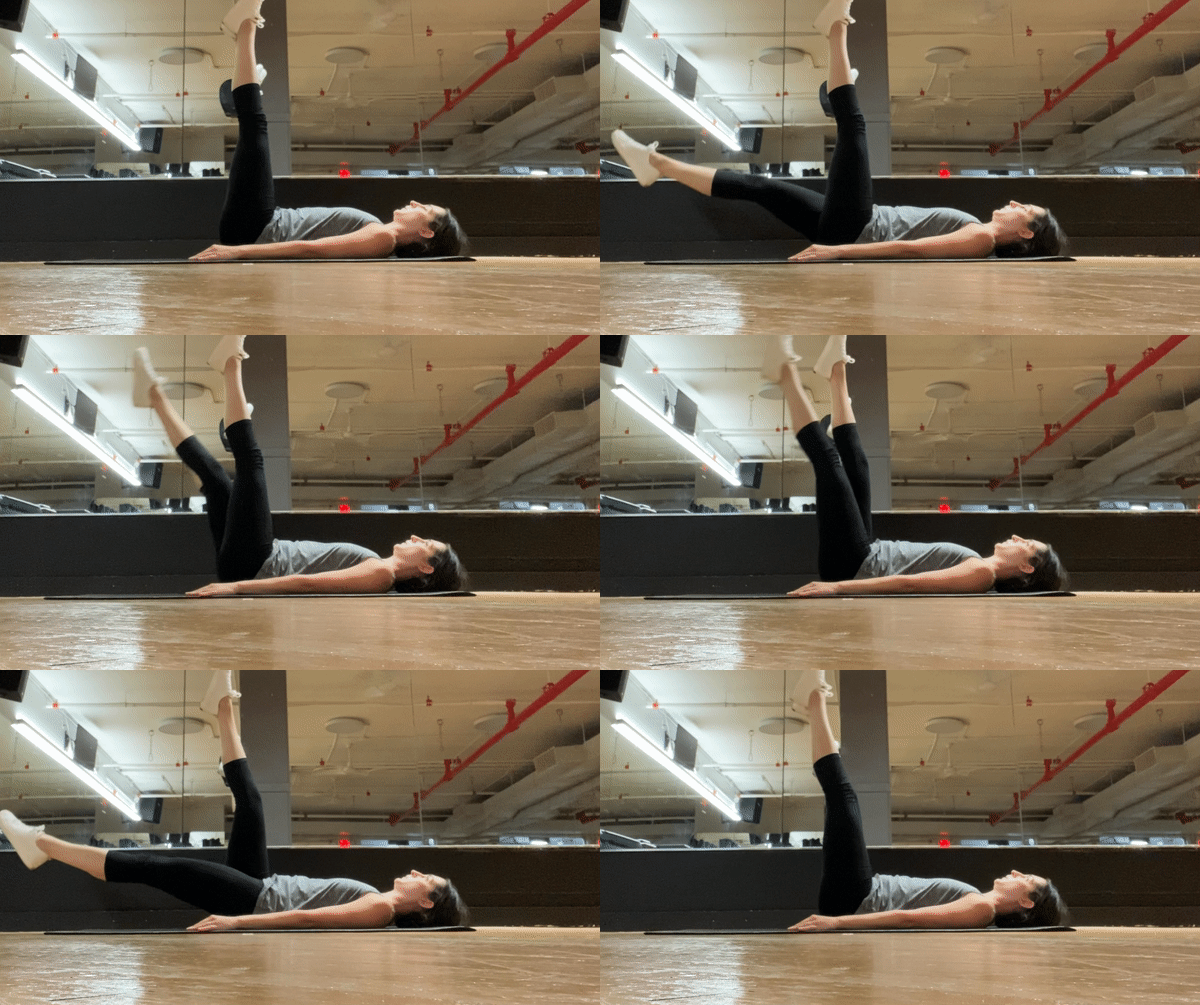
Lie down with arms by your sides, palms down. Engage your abdominals (see explanation above) and lift your legs to a 90-degree angle with your torso, legs either fully extended or knees slightly bent. Keeping your shoulders and hips steady, lower one leg toward the floor — only go as low as you can while maintaining a neutral spine! — then return to the starting position. Switch legs. Perform 8–10 reps with each leg, then rest. You can do another set or two if you like. (Again, if you need to soften the knees slightly to do this, that’s fine. Or give yourself a little hamstring stretch before you start and see if you can do it with the leg fully extended.)
Option 4: Beginner Lower-Lift
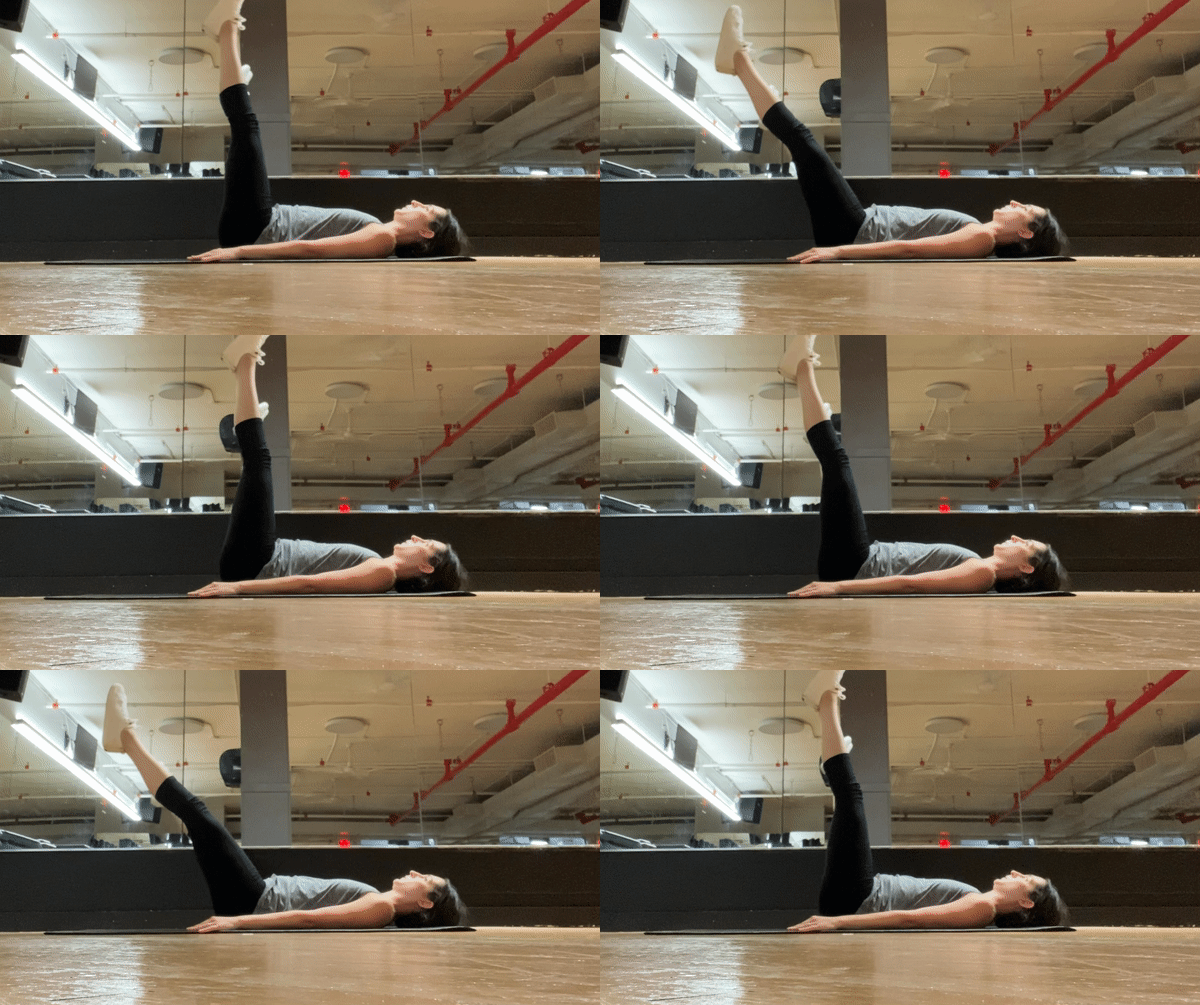
Lie down with arms by your sides (or with hands just below your sacrum, underneath your hips, to help keep your lower back from arching). Engage your abdominals and extend the legs toward the ceiling, legs glued together and feet pointed. Lower your legs to a high diagonal or to 45 degrees, then lift back up with control. (Avoid using momentum and hiking your hips off the floor when you lift your legs back up — keep your pelvis and spine neutral). Perform 5–10 reps, then rest.
Option 5: Lower-Lift
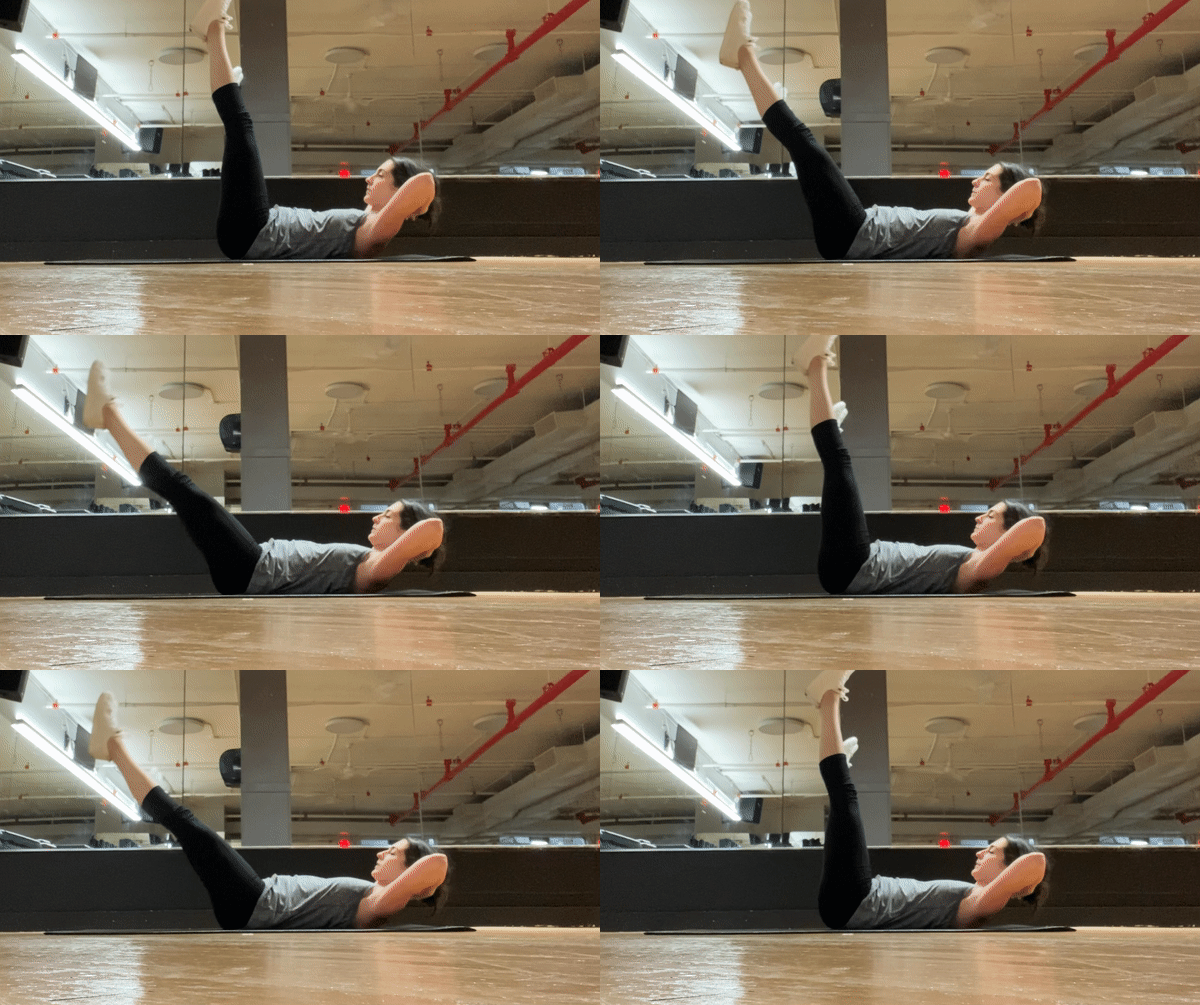
Lie down, pull your knees into the chest, and lift your head and shoulders off the mat. Place your hands at the base of your skull, elbows wide. Try to lift your head a little higher — see if you can get your shoulder blades off the mat. Extend your legs toward the ceiling, at a 90-degree angle with your torso. Glue your legs and feet together. Lower your legs to a 45-degree angle, then lift them with control to the starting position.
Perform 8–10 reps, then rest. You can play with tempo here: Lower slowly (for a 3-count) and lift quickly (just keep your tailbone grounding into the mat to maintain a neutral pelvis — don’t hike your legs back up with momentum); or lower quickly and then lift slowly. Or both!
Another great option here, by the way, is to lie on your back with your knees bent and feet flat (like you’re setting up for a bridge exercise), and then exhale as you slide one foot away from you along the floor, then inhale to bring it back in, and repeat on the other leg. Or do both at the same time (exhale to reach, inhale to pull back). It may feel more controlled than lowering your legs from a lifted position — but you’ll still feel that TA kicking on!
Note: A version of this post, and the accompanying images, originally appeared on Medium when I was writing for Better Humans.
xo
Anna
Question: When I do these it feels like my shoulders want to lift up off the floor and my neck strains. Is that how it should feel?
I wish I could figure this stuff out. I struggle to do any such exercise. My abdominals are a mess (big babies, abdominal surgeries) and I always catch myself holding my breath when I need my abs to do something hard.
I don’t think I’ve ever done such exercises “right.” I think I always use my back. Certainly I’ve never experienced any kind of soreness the next day in my abs that would suggest they actually did any work.